Project
CycleReg: registration and check-in for bike races
I built a local prototype that takes volunteer-run bike races from category setup through rider registration, bib assignment and start-list exports.
Product · Race registration · In development · Event operations / Registration workflows / Data integrity
Problem
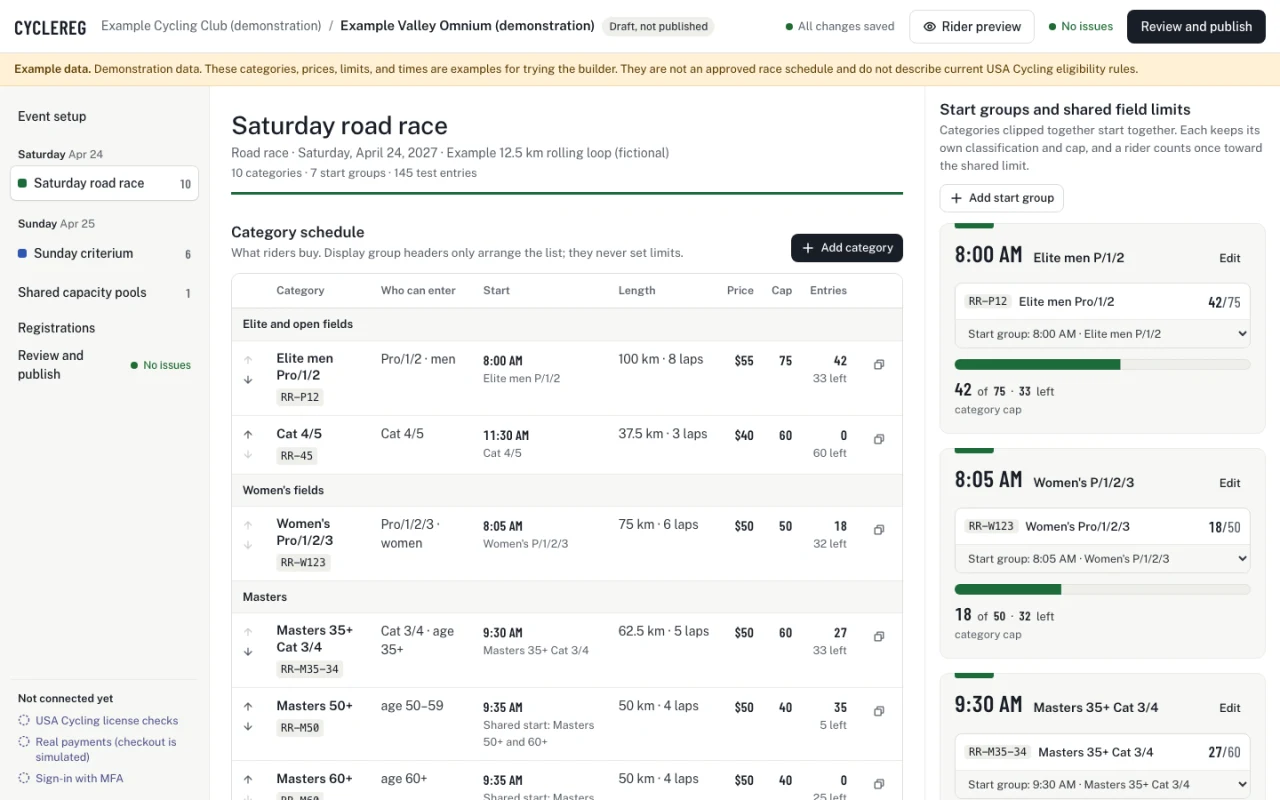
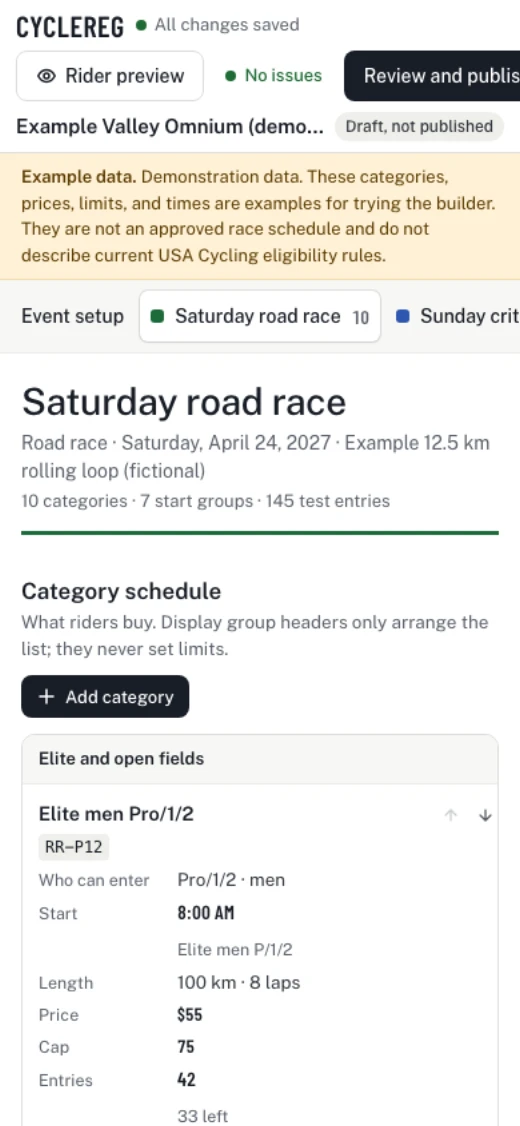
A race category tells a rider what they are entering. A start group tells organizers who lines up together. A small committee has to manage both, along with field limits, eligibility and entry changes, and still hand a correct start list to the timer.
Built for
- Volunteer race organizers
- Riders registering for a race weekend
- Check-in volunteers and timers
What I built
Organizers can configure a road race or criterium weekend. Riders can choose eligible races and complete a simulated checkout. On race day, volunteers can look up entries, see what blocks check-in and assign bibs.
- 01Set up races
- 02Publish
- 03Register
- 04Check in
- 05Export
- Category and field setup
- Set eligibility, registration windows, category caps and shared field limits.
- Rider checkout
- Choose one or both days, hold places while checking out and receive a demo confirmation with a check-in code.
- Race-day check-in
- Find a rider, see whether they’re ready or blocked, and assign a bib.
- Start lists and exports
- Create numbered start-list snapshots and export a sample timer CSV.
Key decisions
How should registration model a shared start? 315-3.1
What happens while a rider checks out? 315-3.2
Outcome
- The end-to-end workflow runs locally with demonstration data and simulated payments.
- Automated checks cover two riders trying to take the last available place and several race-day workflows.
- A public deployment, live payments and live license verification are still ahead.
Capabilities
Event workflow design, PostgreSQL, Capacity controls, Checkout simulation, Versioned CSV exports
Lessons
- A start group and an entry category need separate rules, even when riders line up together.
- Check-in volunteers need to see what blocks a rider and what action they can take next.